Author Q&A
Do your books have a lesson? Moral?
I always try to push my narrative towards an emotional catharsis. A good denouement, like a good poem, can mean many things to many different people. The core conflict in the Parting the Veils trilogy is between personal sovereignty and the relinquishment of one's power to an external authority, even a god-figure. So the moral in that sense would be to trust your inner nature and guidance, not to deny the idea of divinity, but rather to honor the divinity that expresses and discovers itself as you.
The story examines and often contradicts certain beliefs prevalent in our culture. One of the biggest is the idea that love is impotent in the face of violence and aggression. I wanted to dramatize the power of love, human potential, and trusting our inner guidance.
Are your characters based on real people, or do they all come entirely from your imagination?
All of my characters are fictional, though sometimes they appear and speak so vividly that I have to wonder whether they're really the products of my imagination.
Of all the characters you have created, which is your favorite, and why?
So much of the novel and the entire series revolves around ideas of partnership and spiritual community. Every player in the drama contributes to unraveling the core dilemma, and none of them can accomplish it on their own. So it's difficult for me to isolate one single character, but I really enjoy Esperidi as a protagonist.
For a long time, I've wanted to write an epic in which the central conflict is resolved without resorting to violence, manipulation, or outwitting the enemy. Esperidi doesn't possess abilities that lie beyond any of us. She's neither warrior nor savant. She's a hero of the heart. As she makes her way through a ravaged land, she touches the hearts and souls of those with whom she comes into contact. Her very presence allows light to gain a foothold in a land where darkness has been prevalent.
What would the main character in your book have to say about you?
Usually, when Esperidi speaks to me directly, she challenges the limiting beliefs I hold that cause pain or limitation, like reminding me of my essential worth when I'm beating myself up over some perceived shortcoming.
What is the hardest part of writing your books?
Finding the ideal balance between all the various elements of the story. My work explores how inner and outer realities intertwine and reflect one another: dreams and waking reality, inner turbulence and outer conflict, soul realizations and the unraveling of external knots. Pacing is like prepping a good cake. The ingredients have to be in the right proportions to one another so it doesn't read like a New Age book disguised as an epic fantasy, or vice versa.
How did you start your writing career?
I made several ill-fated attempts to write short stories. Writers are often advised to do that, to build up a resume by placing smaller pieces in magazines, but I have a natural predilection for epics. Whenever I attempt short fiction, I either lose interest in the idea or, if I've struck some fire, it'll grow and branch out beyond the bounds of that form. So finally, I stopped trying to hold myself within an uncomfortably small container and just followed the muse.
Not surprisingly, the result was an epic.
Is there anything you find particularly challenging in your writing?
I naturally think in terms of broad themes and my character's internal lives. At times, it can be difficult for me to visualize locations and specific scenarios. So, I've taken to sketching and painting scenes, much like movie storyboards, to help me envision details and move the action organically.
How many books have you written, and which is your favorite?
I've unpublished several novels over the years because I felt that they weren't fully realized. I was reaching for a vital, living myth, and it took me time to develop, not just as a writer, but in my personal journey and understanding, to reach the point where I could convey a message like that.
My last novel, “The Authors of This Dream,” was a significant step in that direction, but “Ophia's Sister Soul” is my favorite. It's an entirely evolved vision, I think. All three parts of this intended trilogy, Parting the Veils, took shape and developed simultaneously, and the world of Ophia evolved over several years. Nothing progressed linearly. Once I started focusing on the first installment, it probably took about six months to pull the various pieces together and make the narrative seamless.
Did you have an author who inspired you to become a writer?
Stephen R. Donaldson. When I discovered The Chronicles of Thomas Covenant the Unbeliever at age 11, it completely altered my conception of storytelling, as well as the scope and depth that stories can encompass. I decided right there that I wanted to create something that would affect others the same way that this story was affecting me.
That trilogy completely radicalized my conception of what a story is, the themes it can explore, and the scope it can encompass. The second was discovering Jack Kerouac in my late teens and early 20s. His writings transformed my whole notion of what language itself could do.
What else do you like to read?
I'm really influenced by all the books that comprise The Seth Material by Jane Roberts. I've also devoured countless biographies of various musicians, poets, writers, and painters. I've always had this hunger for anything that illuminates the creative process and how other artists have lived with the muse. I think that was the main appeal. How do you live with this ceaseless chatter in your head that you must express and put into form somehow?
Can you share a little bit about your current work?
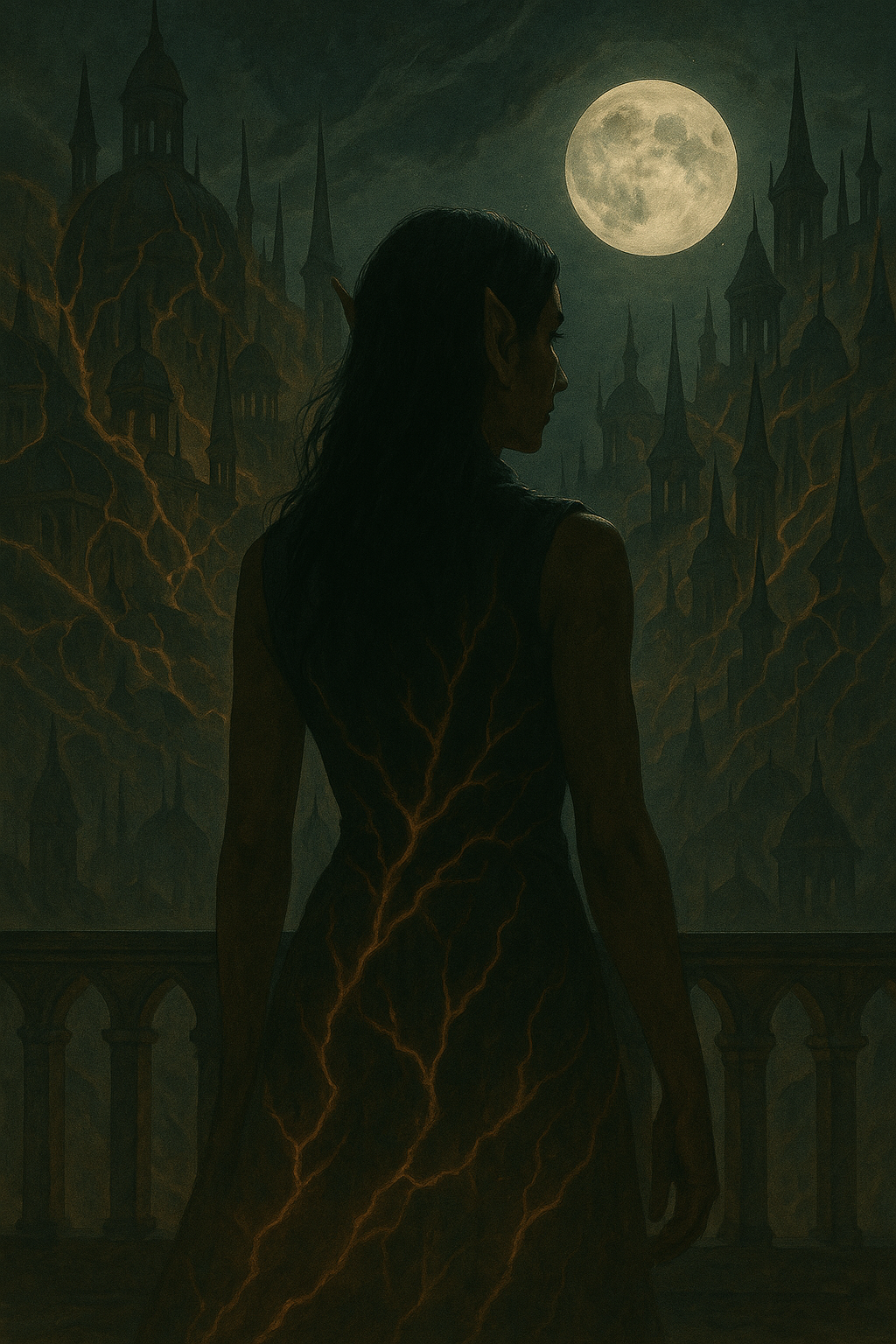
The follow-up to “Ophia's Sister Soul,” “Gossamer Veils,” broadens the overarching conflict and deepens the stakes. From Colleen's perspective, the overall arc revolves around core cultural beliefs that have created significant collective suffering and limitation. For simplicity's sake, we could categorize those systems as religious and scientific. The first book was primarily concerned with the old scientific conception of life, exploring the consequences of seeing ourselves as thrown into an accidental universe in which our individual lives have no purpose or significance. The second focuses on religious distortions that can leave us feeling estranged from ourselves, lost, and in need of an external authority to get our bearings.
Where are you from? Tell us a little bit about yourself.
My childhood was basically divided between Connecticut and Vermont. When I was 20 years old, I took a Greyhound out to New Mexico with a guitar, backpack, and $90 in my pocket and threw my fate to the winds. I wrote songs and performed either solo or in bands for the next few years, and music has made its way into every story I've written ever since.
I struggled for quite a few years, and a big part of my inner awakening involved realizing that I was the one creating those struggles to begin with. Beliefs about reality seem to be self-evident. The power of belief creates evidence that seems to prove our convictions are true. So I drew upon my own experiences in confronting my beliefs, replacing, enlarging, or discarding them to create the arc of Brandon Chane's spiritual journey in “The Authors of this Dream”.
What is your writing process like?
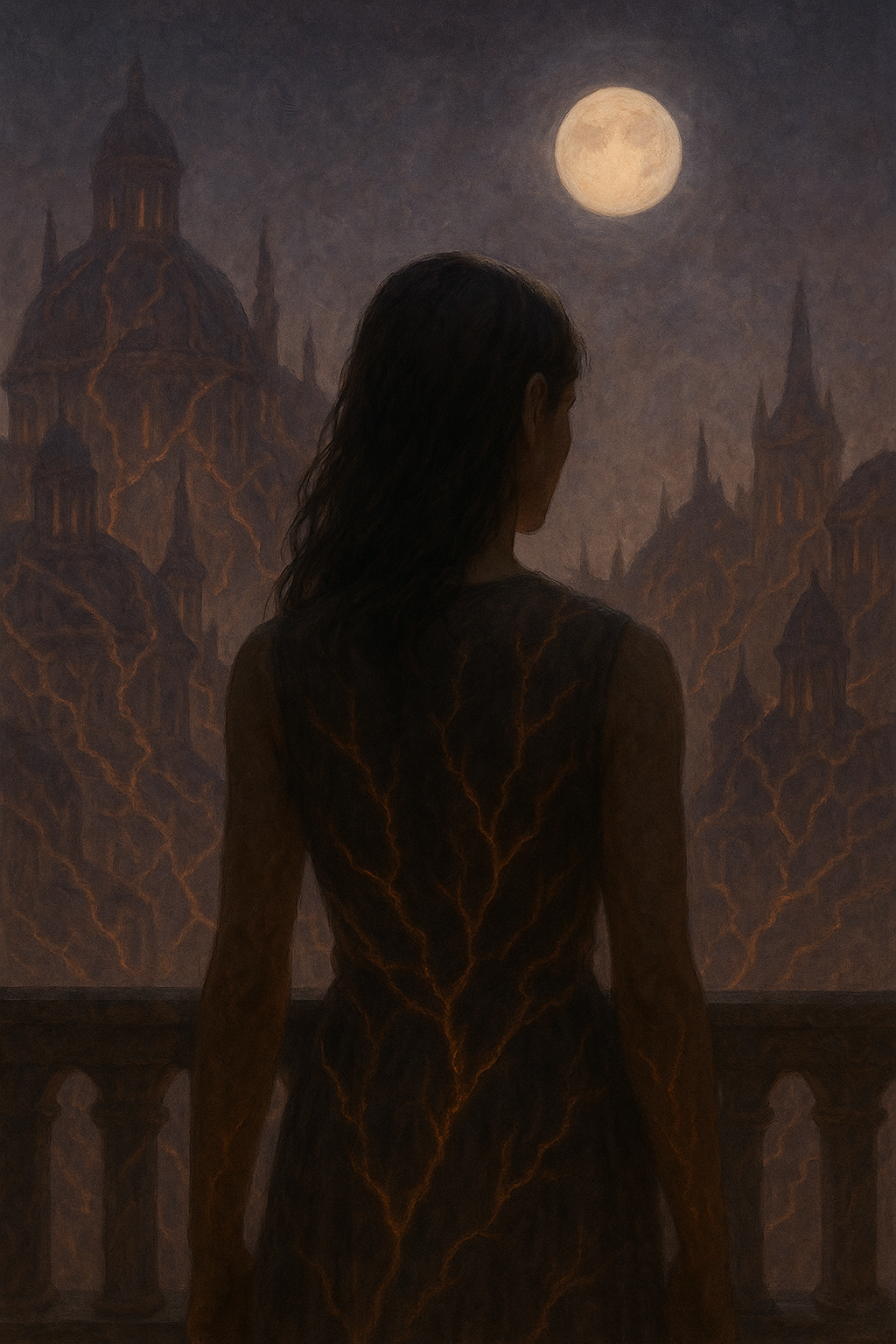
I don't have anything resembling a fixed approach. Writing, for me, occurs in fiery, imaginative flights that oftentimes last no longer than 20 minutes or so. On a good day, though, I may have a dozen creative outbursts like that. They could happen while I'm cooking, walking in the park, sitting in a cafe, or, oftentimes, actually in my bed before I've even gotten up in the morning, and my characters are chattering away, telling me all about their lives. I'm going to grab my phone and record everything I'm hearing before I lose it.
It's kind of like trying to recall a dream in that way. You wake up, it's all there, but when you go to get it down in your journal, you can feel things slipping away, and what you end up getting down on paper is just the bare bones. But then maybe if you sit with it, it starts to come back. If you get those details down, then more starts to bleed through. And if you stay with it, it'll fill out and catch the whole vision again.
The act of writing itself provokes my thought process while I'm doing it. My most powerful ideas tend to bubble up spontaneously, so I usually write a first draft without planning too much beforehand.
I do like to have at least one clear image at the onset, though. Maybe just a peak emotional point that I'm reaching for that serves as my North Star, something I can navigate by.
What would your advice be for authors or aspiring authors regarding writing?
The most difficult and rewarding challenge involves uncovering your own voice. It's not too difficult for someone with the innate ability to write well with practice, study, and application. The ones who really shine and make their mark, though, are those who write in a voice that's uniquely their own, and that's a much rarer feat.