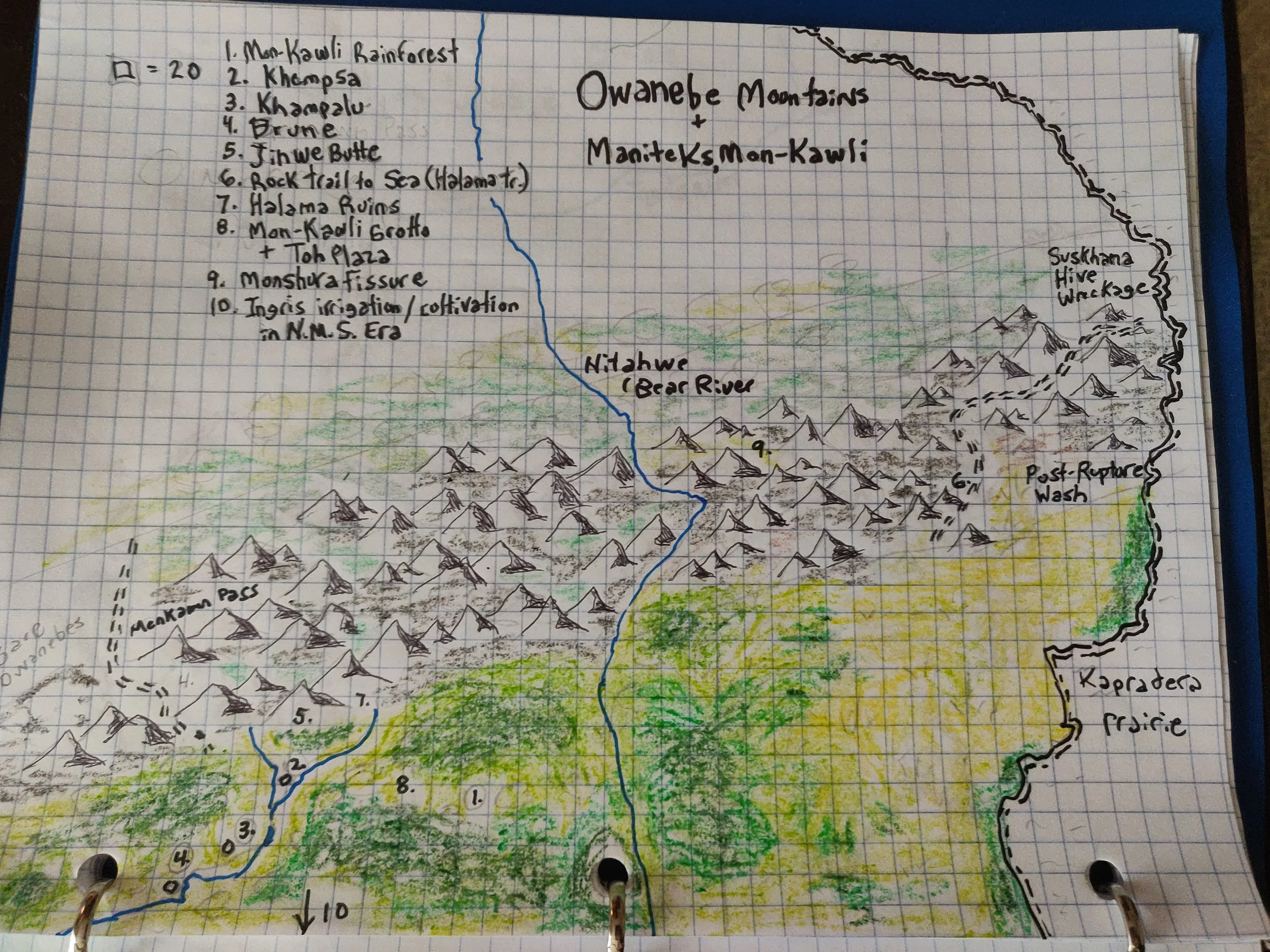
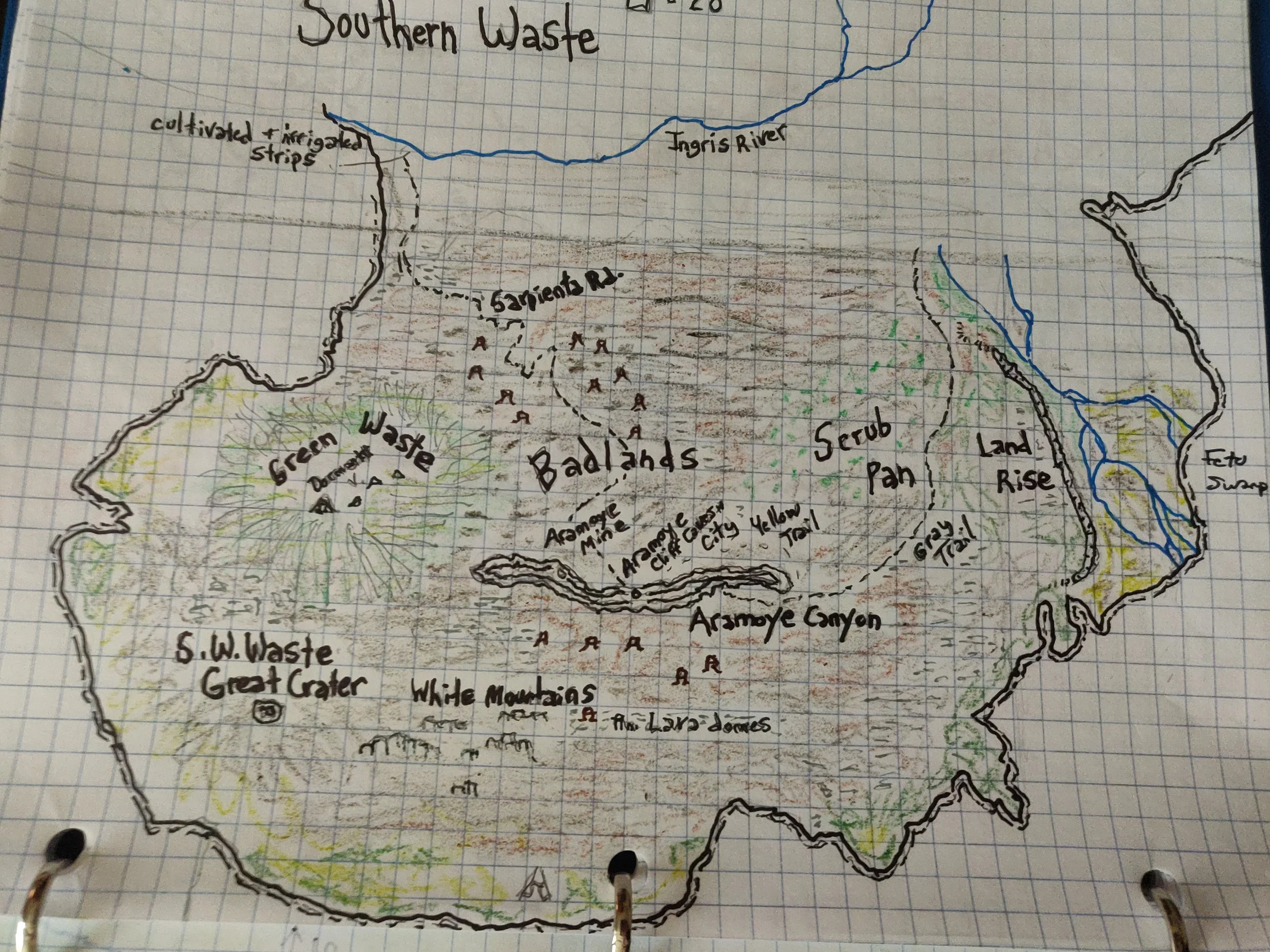
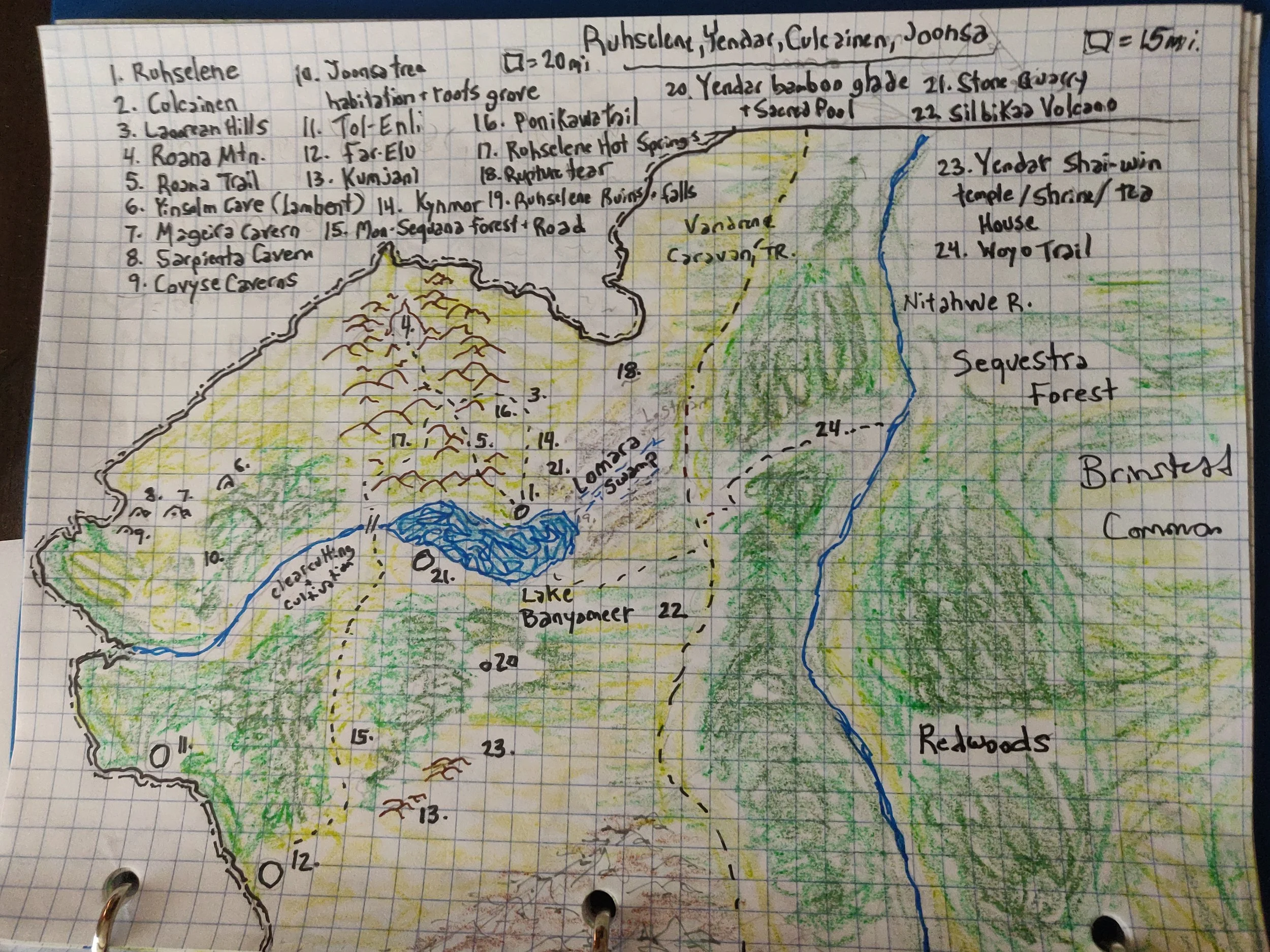
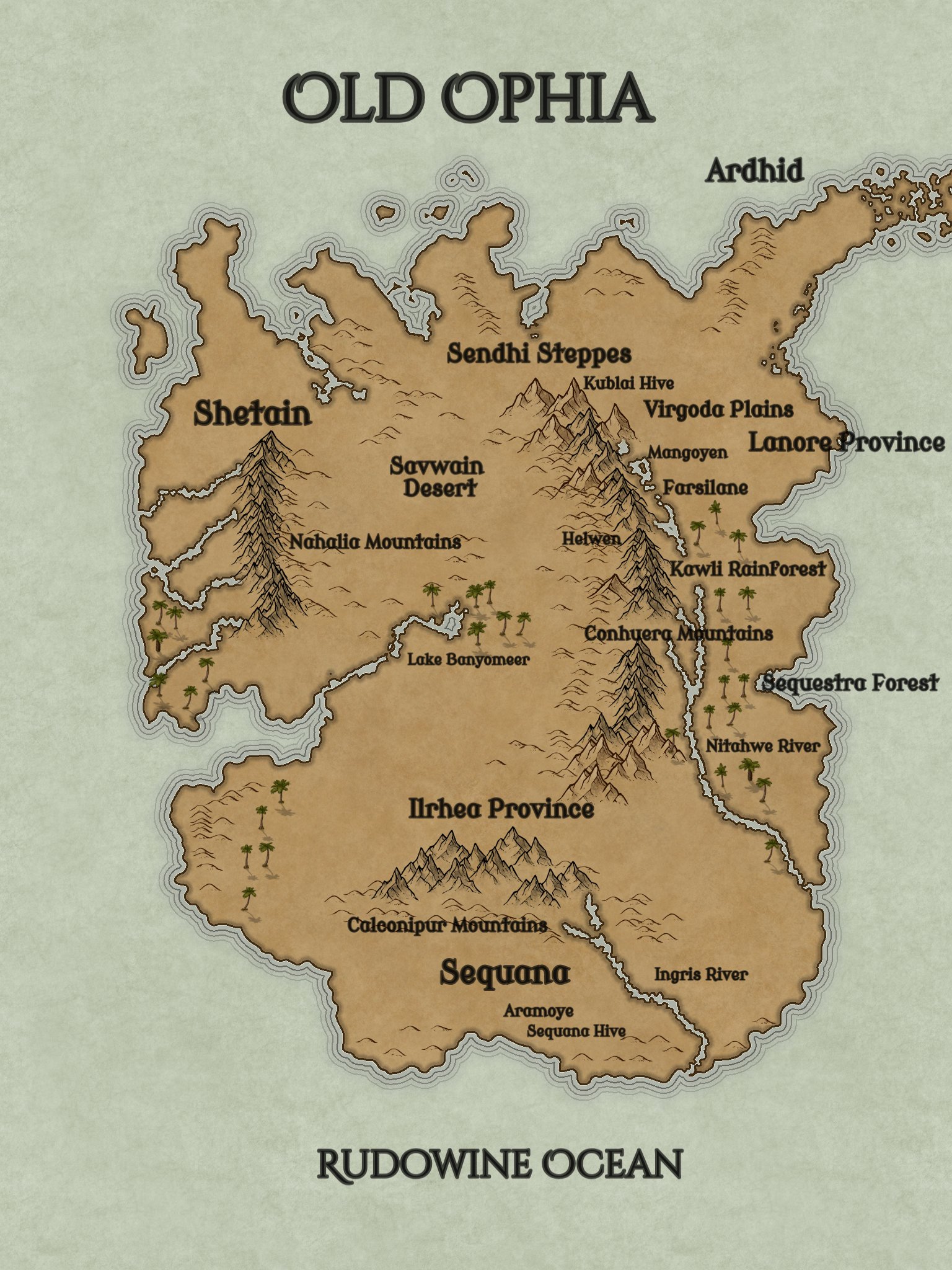
Welcome to the World of Ophia.
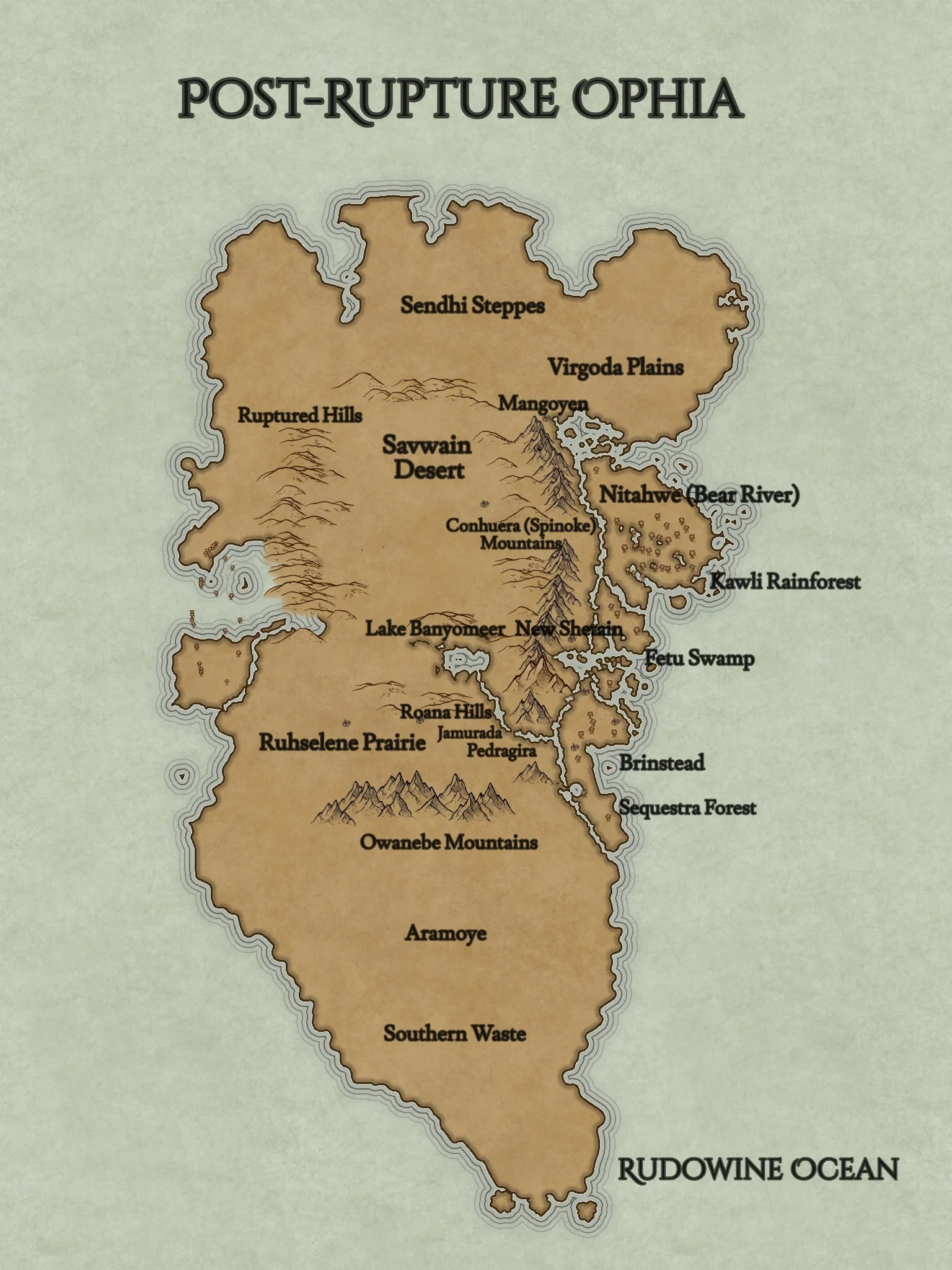

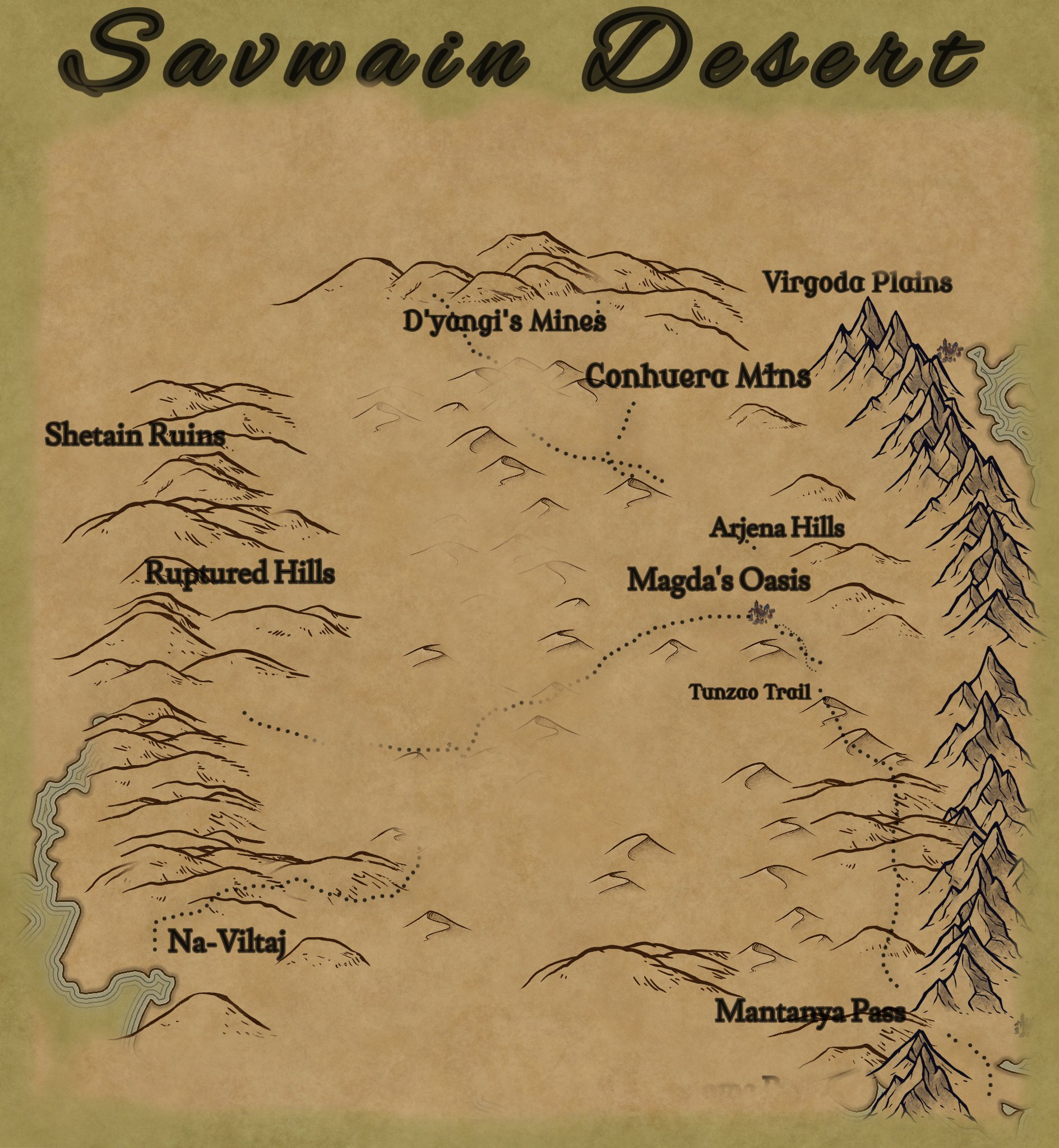
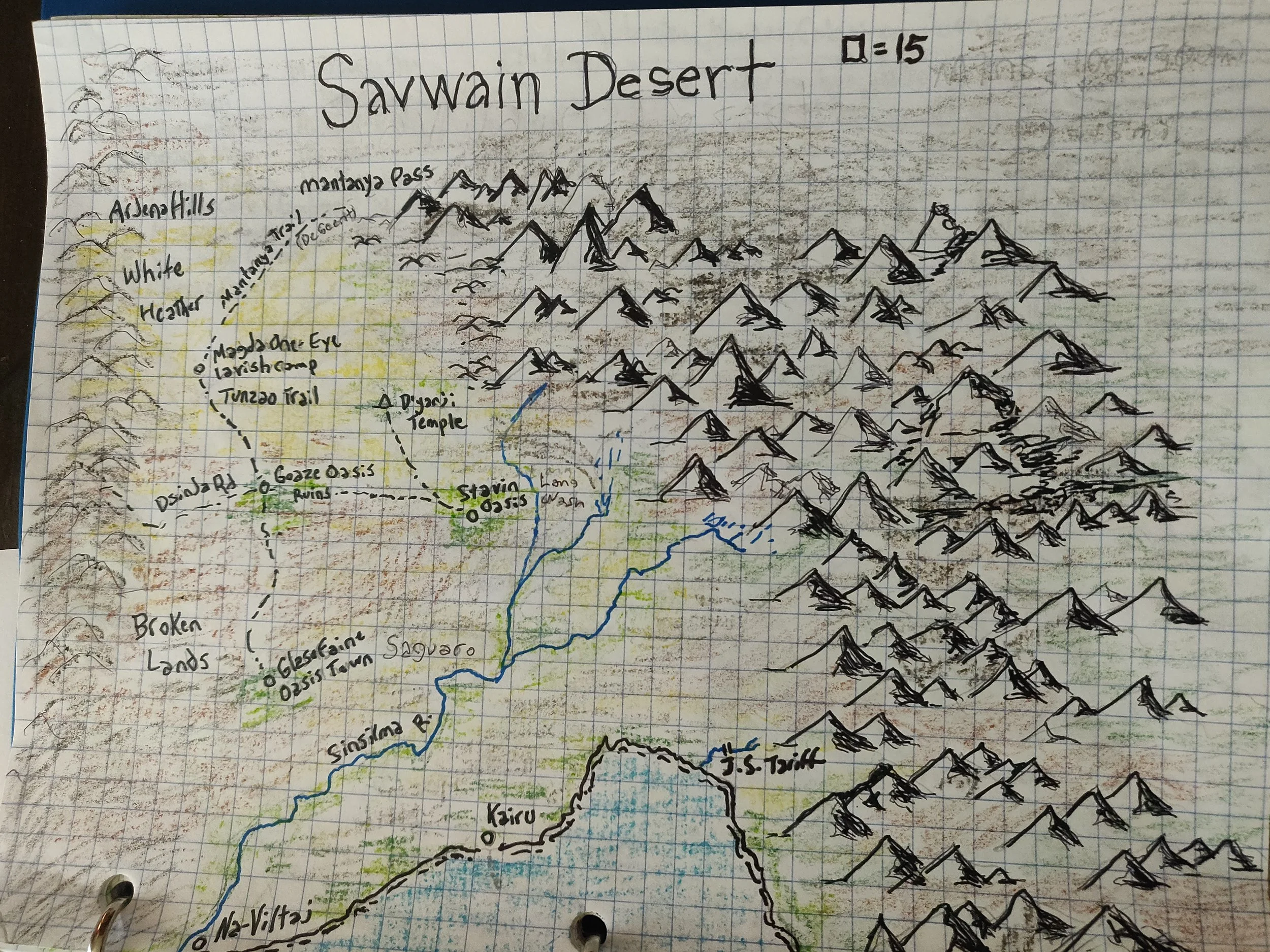
After a few miles, the wash opened into a broad dust plain. Here, one could hike all day, and the flat-topped rock buttes on the horizon would appear no taller than they had at the journey's onset. Esperidi was grateful for the cloud cover on the second day; it spared her some of the sun's glare. By the time she reached the outskirts of Magda's Oasis on the third afternoon, she'd emptied her waterskin.
Peace, or at least its facade, graced the Oasis. A few milky cumulus clouds lurched across the sky. The land’s instability was difficult to conceive while the honey mesquite trees swayed and the cactus wrens chirped contentedly.
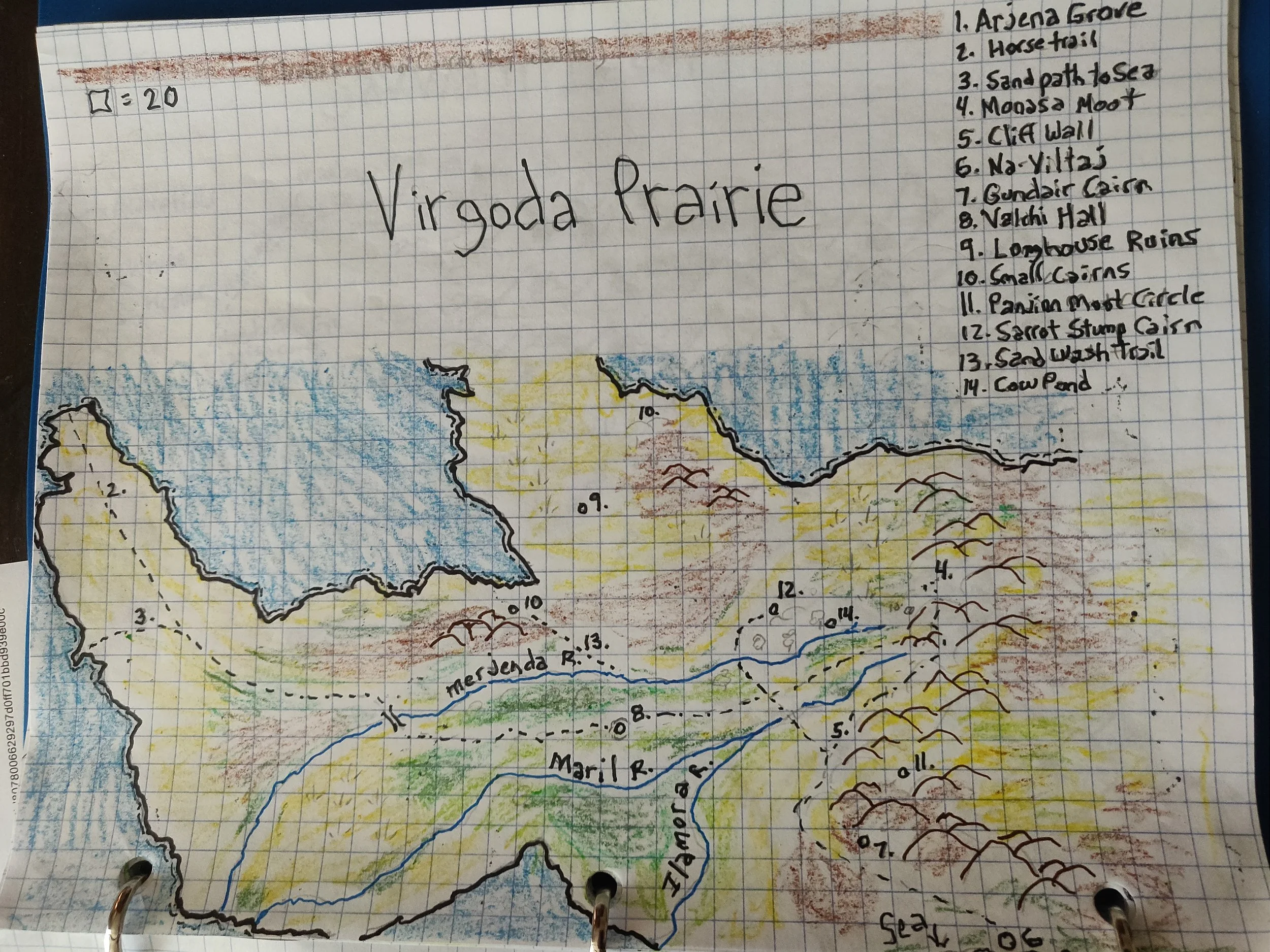
Esperidi noticed that most of the settlement’s labor was done in the main thoroughfare. Buffalo roaming the Virgoda Plains and cattle from the more verdant pastures in the Savwain—like the land surrounding the Oasis—provided most Vandrene necessities: clothing (down to moccasins), meat, shelter, and bone and tooth ornaments.
Hides were smoked, stretched, and soaked in oily water to keep skins from hardening into rawhide. Other items were crafted with flax, such as the rush mats laid before the cavern-like adobe homes and the backrests for repose, woven of willow shoots and held up with wooden posts. Children labored as diligently as their elders, stirring pots, fleshing hides, weaving, and carving. They wore tunics and leggings of buffalo or buckskin. Many of the adult males, skin bronzed from the desert sun, were bare to the torso.
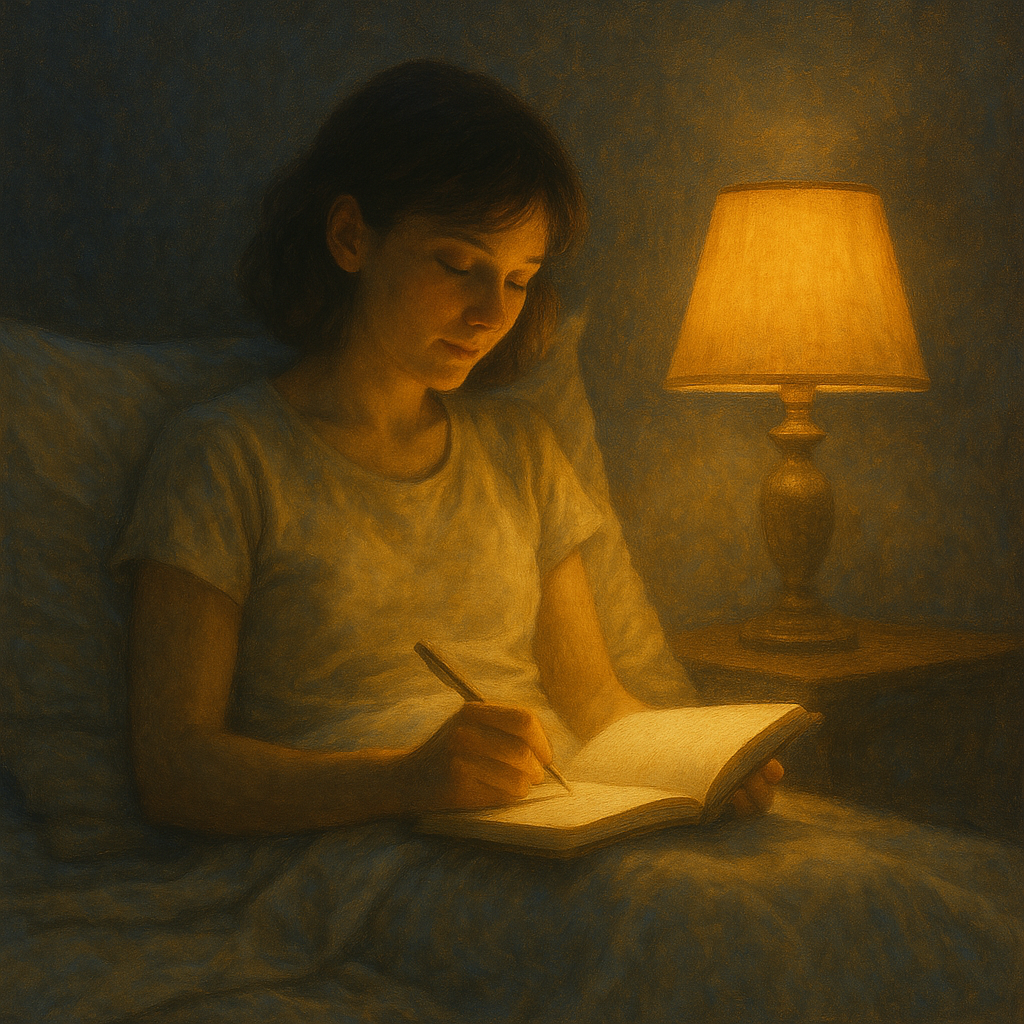
Ophia’s Sister-Soul - “Sajna of the Savwain Desert”
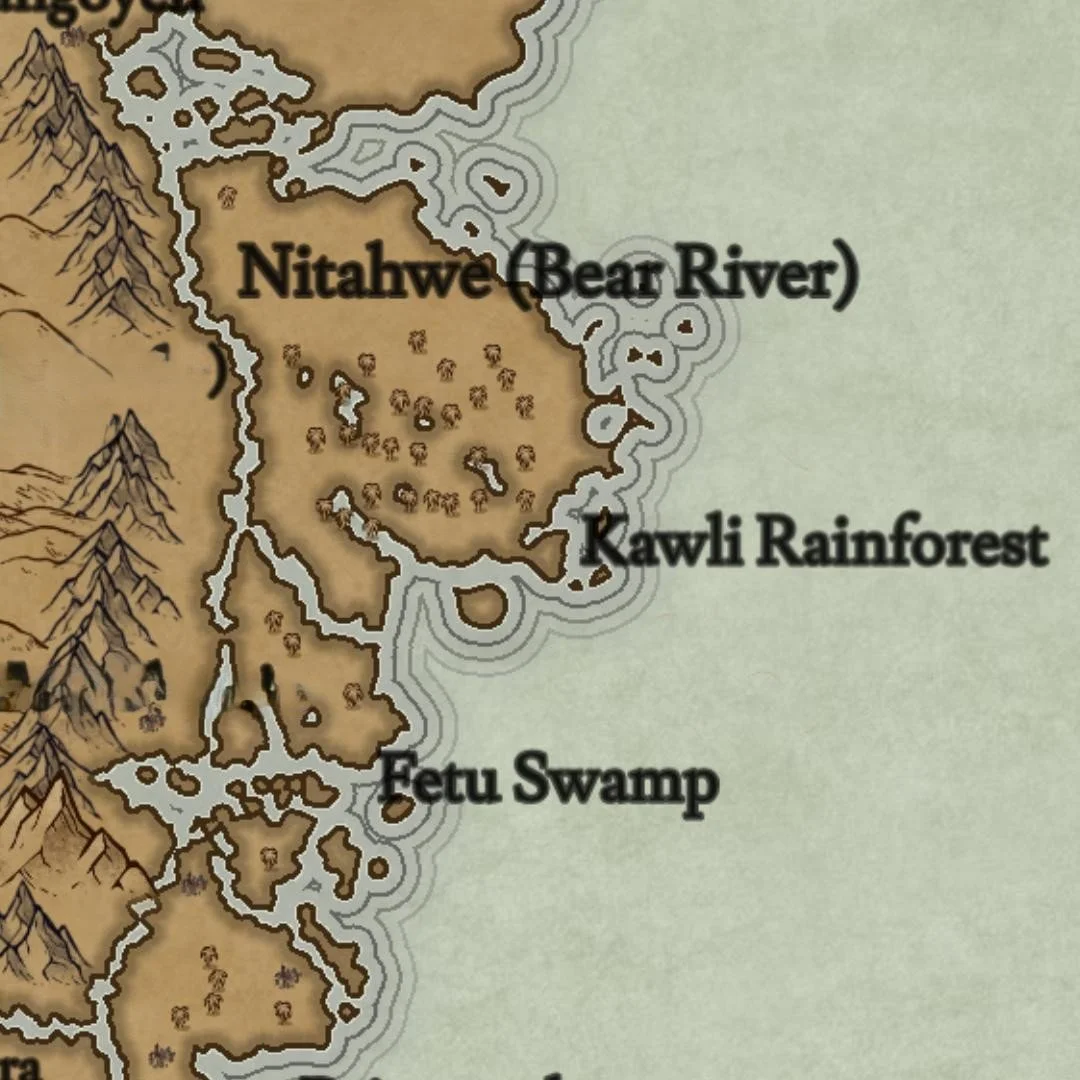
Disembarking upon Sarpi’s back, they were soon soaked in a vehement downpour that turned the serpent’s trail into a veritable marsh. Wet, muddy, and miserable, Jemcay rummaged through scraps of her memories for consolation. She envisioned Helwen hearth fires that consumed no fuel, incandescent spheres warming body and soul, and timbres that could shelter vulnerable flesh from the fiercest storms.
Meanwhile, her serpent savior negotiated mud pits that pulled at his underside and torpid streams that latticed the swelling swamp. His brilliant hues vanished beneath a dark brown coating.
“But this at least feels like a natural storm—rainfall that nature intended!” Wakeen called. “I sense no force of amok within it.”
Jemcay’s grunt might have been intended to mean, “That’s a small consolation!” But she took his meaning and was consoled. Amok was a term the surviving Shaini used to describe the Rupture’s lingering effects, its perversion of natural patterns.
Nevertheless, they toiled for six days beneath relentless rains, feeding upon what jungle bounty they could snatch at a run, consoled only by the thought that the storm obscured their passage. Then, as the rains finally tapered, they reached a waterway that ran fresh—with little reek of rot.